

Alginate Oligosaccharide — Nurturing Gut Health, Regulating Metabolism
As consumer interest in natural functional ingredients continues to grow, Alginate Oligosaccharide—derived from natural marine brown algae extracts—has emerged in recent years as a highly acclaimed plant-derived bioactive substance. Naturally gentle and easily absorbed, it focuses on nurturing intestinal health and regulating human metabolism. As a naturally occurring oligosaccharide, it holds broad prospects for application across various fields, including pharmaceuticals, food, and cosmetics.
I.Production Process for Alginate Oligosaccharides

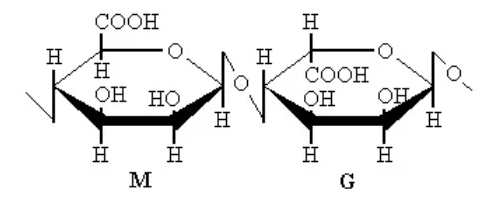
Alginate oligosaccharides are primarily derived from brown algae species, such as kelp, *Sargassum*, giant kelp, and *Ascophyllum*. The raw material for production is sodium alginate, which undergoes a series of processing steps including hydrochloric acid hydrolysis, high-temperature degradation, alkaline neutralization, decolorization, purification, concentration, and drying. The final product consists of short-chain polysaccharides with a degree of polymerization ranging from 2 to 10; it is readily soluble in water, possesses a mild taste, and can be conveniently added directly to beverages, yogurt, or functional snacks.
II. Alginate Oligosaccharide vs. Seaweed Polysaccharides / Marine Collagen / Sea Cucumber Polysaccharides: A Comparison
| Comparison Dimension | Alginate Oligosaccharides (AOS) | Seaweed Polysaccharides | Marine Collagen | Sea Cucumber Polysaccharides |
| Molecular Weight | Small molecule, extremely low molecular weight | Large molecular weight | Medium molecular weight | Relatively large molecular weight |
| Absorption Characteristics | Easily absorbed in the gut, rapidly fermented and utilized | Difficult to absorb, low digestion and utilization rate | Focuses on skin absorption, weak intestinal absorption | Slow absorption, delayed onset of effects |
| Core Functions | Focuses on intestinal regulation, repairing intestinal barrier, and regulating gut microbiota | Auxiliary moisturizing, basic prebiotic effects | Focuses on skincare, beauty, and joint care | Tonic health support, immune regulation |
| Water Solubility | Excellent, instant dissolution with no precipitation | Average, prone to clumping when dissolved | Moderate solubility | Poor solubility |
| Physicochemical Stability | Heat-resistant, acid & alkali-resistant, high stability | Relatively weak stability | Prone to denaturation under temperature changes | Average storage stability |
| Food Compatibility | Versatile, suitable for addition to various foods and beverages | Limited application scenarios | Mostly used in protein-based products | Primarily used in high-end health supplements |
| Product Development Potential | Wide compatibility, low cost, easy formula innovation | Many formulation restrictions | Biased toward cosmetics and functional beverages | Biased toward high-end health foods |
| Intestinal Regulation Effect | Optimal, highly targeted | Basic prebiotic effect | Virtually no intestinal regulation effect | Weaker than alginate oligosaccharides |
Ⅲ.How do Alginate Oligosaccharides nurture the gut and regulate metabolism?
Regulation of Gut Microbiota
The core mechanism by which Alginate Oligosaccharide regulates intestinal homeostasis lies in balancing the gut microbiota. Comprising both beneficial and pathogenic bacteria, the gut microbiota’s equilibrium directly impacts intestinal health. As a high-quality prebiotic, Alginate Oligosaccharide promotes the growth and proliferation of beneficial bacteria, such as probiotics and *Lactobacillus* species. Concurrently, it stimulates the production of short-chain fatty acids, aids in repairing damaged intestinal mucosa, and helps maintain intestinal homeostasis. Studies have demonstrated that films formulated with Alginate Oligosaccharide exhibit antimicrobial activity against common pathogenic bacteria—such as *Staphylococcus aureus* and *Escherichia coli*—as well as certain pathogenic fungi. Furthermore, it protects the intestinal barrier from damage induced by enterotoxigenic *E. coli*; when used in combination with probiotics, it demonstrates a synergistic effect in the prevention of diarrhea.
An 8-week human clinical trial revealed that a daily intake of 300 mg of Alginate Oligosaccharide led to a significant increase in the population of intestinal *Bifidobacterium*, while reducing scores for intestinal discomfort by 40%.
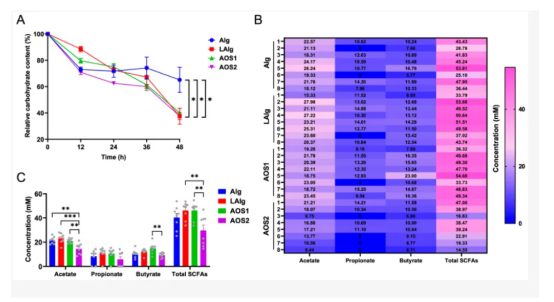
Fermentation of Alginate and AOS by the Human Gut Microbiota
Antioxidant Activity
Alginate oligosaccharide also enhances the antioxidant capacity of the gut by modulating the intestinal microbiota. It boosts the fermentation activity of specific bacterial populations within the gut, reduces intracellular levels of reactive oxygen species (ROS), and—by activating the Nrf2 signaling pathway—upregulates the expression of antioxidant-related genes such as HO-1 and NQO1, thereby mitigating oxidative stress-induced damage.
Immune Regulation
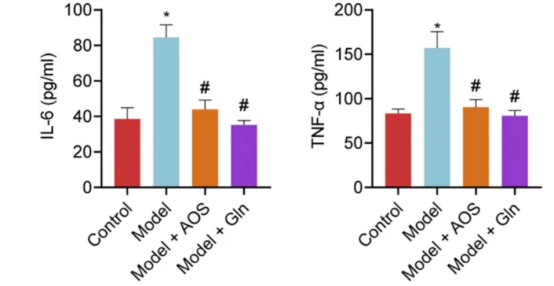
Alginate oligosaccharides enhance the body's non-specific immunity by activating macrophages and boosting the proliferative activity of lymphocytes. Studies have demonstrated that alginate oligosaccharides can inhibit the release of inflammatory cytokines (such as IL-1β and IL-6) and modulate inflammatory responses and immune reactions by regulating signaling pathways such as TLR4/NF-κB, thereby playing a role in maintaining the body's immune balance.
Ⅳ.Alginate oligosaccharides can be applied in...
| Application Field | Application Scenarios / Product Directions |
| Food | Probiotic solid beverage, yogurt, lactic acid bacteria drink, high-calcium milk powder, nutritional powder for the elderly, mineral supplements |
| Cosmetics | Various cosmetic additives |
| Pharmaceuticals | New drug research and development |
 |  |  |
Ⅴ.Do Alginate Oligosaccharides support OEM/ODM customization projects?
Alginate Oligosaccharides: OEM/ODM Customization Available
Customization options include purity, degree of polymerization, and dosage form, catering to diverse sectors such as agricultural inputs, food, health supplements, cosmetics, and animal feed.
We offer comprehensive services including private label manufacturing, formula R&D, custom packaging, and sample prototyping; fully certified and equipped to provide one-stop order fulfillment.
Ⅵ.Industry Trends for Alginate Oligosaccharides:
According to online market data, the alginate oligosaccharide sector has demonstrated rapid growth in recent years. The global market size for alginate oligosaccharides is estimated at approximately US$49 million in 2024 and is projected to reach US$75 million by 2031, representing a Compound Annual Growth Rate (CAGR) of 6.2% over the 2025–2031 period.
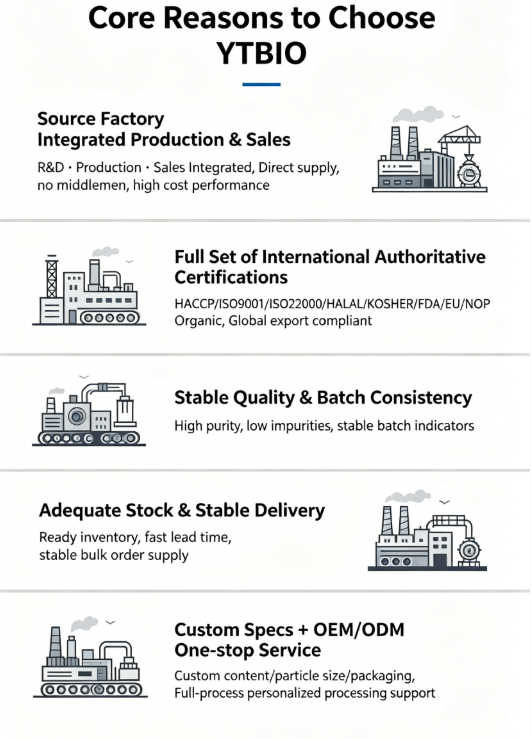
Why choose Ytbio products?
Email: sales@sxytbio.com
WhatsApp/phone: +86 17782577059