

Sensory Healing: The Olfactory Mechanisms and Emotional Regulation of Jasmine Essential Oil
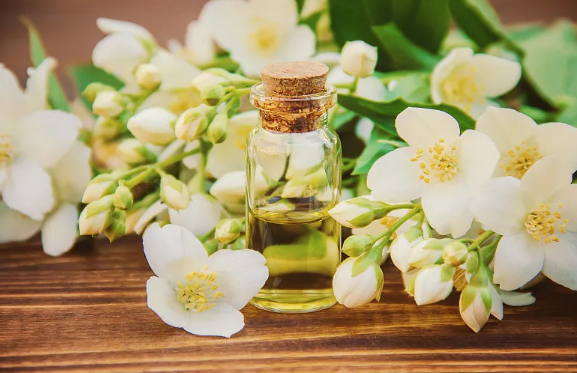
In aromatherapy, jasmine essential oil, with its warm, rich, and emotionally resonant aroma, is hailed as a treasure of natural healing. Contemporary research is gradually revealing that this fragrant substance not only brings sensory pleasure but also, through the body's intricate physiological pathways, directly participates in the natural regulation of emotions and stress, becoming a highly effective natural healer with holistic benefits for mind and body.
The Olfactory Pathway: A Direct Pathway to Emotional Regulation
After jasmine essential oil molecules are inhaled through the nasal cavity, they initiate emotional regulation through two main mechanisms:
The Olfactory-Limbic System Pathway
After the essential oil molecules bind to olfactory receptors, the signal is transmitted directly along the olfactory nerve to the limbic system of the brain—the core area that controls emotions, memory, and stress responses, encompassing key tissues such as the hippocampus and amygdala. Therefore, the aroma of jasmine can quickly evoke emotional responses and regulate psychological states without the intervention of thought.
Trigeminal Nerve Synergistic Pathway
The active components in jasmine can also stimulate the trigeminal nerve, with signals further transmitted to brainstem regions such as the nucleus tractus solitarius and locus coeruleus, thereby regulating autonomic nervous system function and participating in the release of neurotransmitters.
Component Analysis of Jasmine Essential Oil
The effects of jasmine essential oil stem from the synergistic effect of its multiple active components, primarily including:
Benzyl acetate: One of the main components, it can enhance the function of the GABA system in the brain, exerting a soothing effect similar to an anxiolytic.
Linalool: Possesses significant sedative properties, helping to reduce mental and physical tension levels and guiding the body into a relaxed state.
Jasminolide: Regulates mood by affecting serotonin receptors, exhibiting an antidepressant-like effect.
Indole: Can induce feelings of pleasure at appropriate concentrations; its effect is highly dependent on the precision of the formulation.
Holistic Balance from the Nervous System to the Body
Jasmine essential oil triggers a series of physiological changes through olfactory signals, specifically:
Neurochemical Regulation: Increases the activity of the inhibitory neurotransmitter GABA, balancing excitation and inhibition processes; simultaneously regulates the levels of mood-related neurotransmitters such as serotonin and dopamine.
Stress System Soothing: Clinical data shows that regular use can reduce cortisol levels, improve heart rate variability, and reflect a trend towards balance in stress-related physiological indicators.
Brainwave Activity Optimization: Promotes the generation of relaxation-type alpha brain waves while reducing stress-related beta wave activity, helping the mind and body enter a state of tranquility and alertness.

Usage Recommendations
To maximize the benefits of jasmine essential oil, the following methods are recommended:
Aroma Diffusion: Use tools such as aromatherapy diffusers to achieve continuous and gentle olfactory absorption.
Topical Application: After appropriate dilution, apply to areas with rich blood flow, such as the wrists and neck, to enhance the utilization of the herb.
Bath Therapy: Combine steam with transdermal absorption to create an immersive therapeutic experience.
Usage Instructions
Pregnant women, children, and individuals with special health conditions should use this product under professional advice.
The recommended concentration is within a safe range, generally not exceeding 5%.
Always choose pure essential oil products without artificial additives.
Jasmine essential oil, through its unique chemical composition, provides a natural and effective way to regulate emotions by directly accessing the emotional center via the sense of smell. With the advancement of neuroscience research, this ancient aromatherapy is receiving a new interpretation from modern science, bringing innovative opportunities to the mental and physical health industry. If you are interested in our products or have any questions, please contact us at sales@sxytbio.com, and we will reply to you promptly.
References
Kuroda et al. (2005). Sedative effects of jasmine tea. Journal of Natural Medicines
Hongratanaworakit (2010). Stimulating effect of jasmine oil. Natural Product Communications
Akhondzadeh et al. (2010). Saffron and jasmine for depression. Journal of Clinical Pharmacy and Therapeutics